
As Utah entrepreneurs and politicians seek to tackle the state’s most urgent problems, housing affordability consistently ranks high on the list.
“This is probably one of the biggest issues of my generation, when most people do not see the possibility of purchasing real estate anytime in the near future here in the state of Utah,” Tanner Gappmayer says.
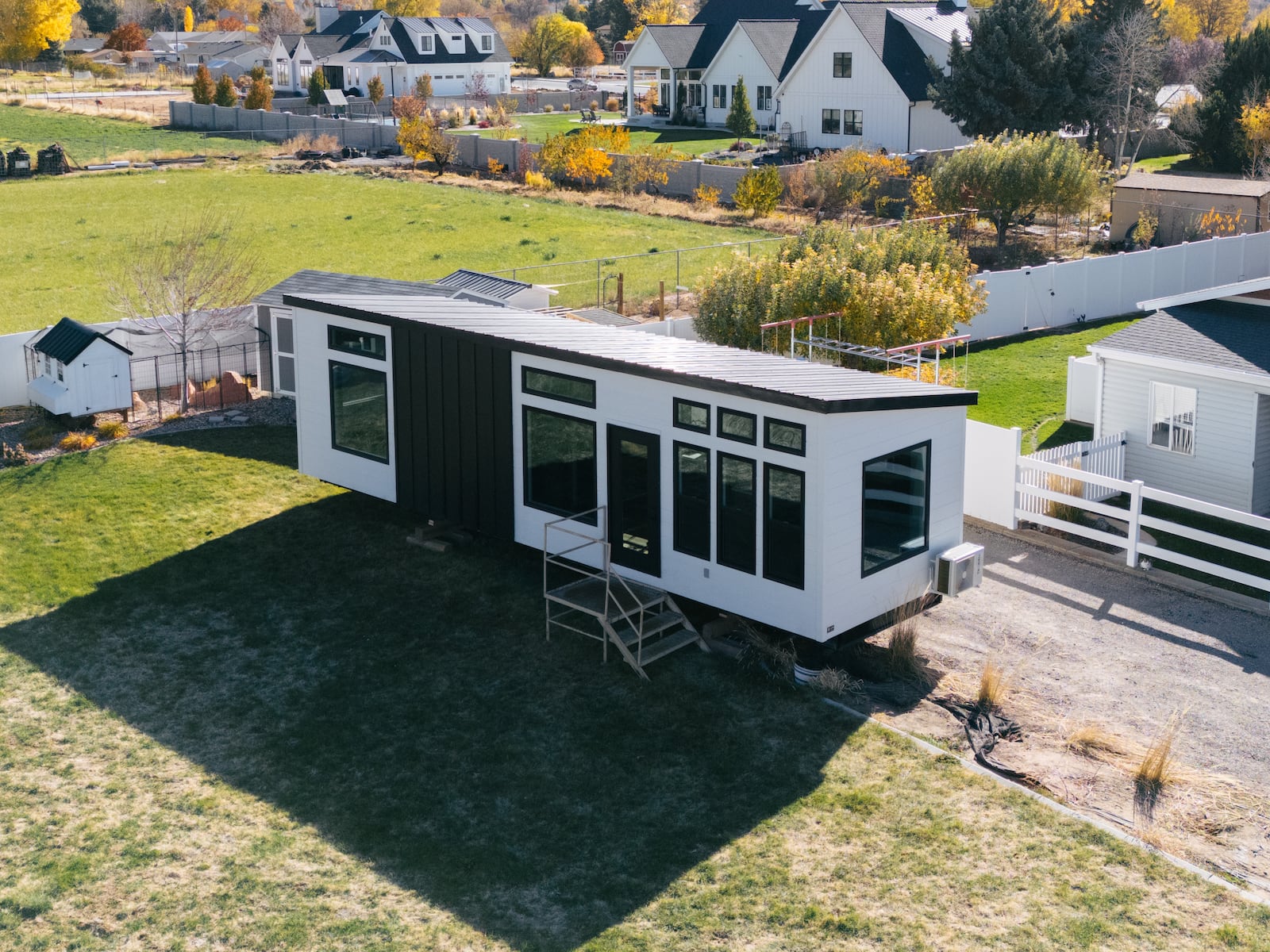
Gappmayer is one of the founders of Summit Luxury Dwellings, a Utah company selling customizable tiny homes that run between 300 and 500 square feet for $75,000 to $99,700.
A “tiny” solution to a growing problem
According to the Utah Association of Realtors, the median home price in Utah rose from $268,000 in 2017 to $500,000 in 2024. That puts even Summit Luxury Dwellings’ most expensive model well below what most Utahns are paying for a traditional home.
Utah Governor Spencer Cox calls barriers to homeownership and affordable housing “the single greatest threat to Utah’s prosperity.” He recently called for the state to facilitate the building of at least 150,000 new homes by the end of December 2028.
Gappmayer says after his first five years in the real estate business, he saw firsthand the difficulties people had in trying to buy their first home, upsizing as their family grew, or downsizing as children moved out. It inspired Summit Luxury Dwellings’ founders to think outside the box.
“I think we’re moving in the direction of California and Nevada when it comes to home prices,” he says. “And so for us to be able to offer a solution that’s affordable, but also maintaining the quality of homes that we build here in the state of Utah, was pretty important to us.”
How are Utahns using tiny homes?
In Summit Luxury Dwellings’ first year of business, customers have used the dwellings for first-time homes on small lots, workforce housing, short-term rental income, multigenerational living situations and more.
Alex Varela, one of Summit’s co-owners, says the Utah legislature made the right call when they made it easier to build accessory dwelling units (ADUs) in 2021.
If someone is building a new house, adding a tiny home on the property often means an extra $600-700 a month loan, but a rental income of about $1,200 a month. That extra cash flow makes the mortgage more affordable, adds another low-cost rental to the area and increases the city’s housing stock without the cost of extending roads and utilities to a new neighborhood.
For people who feel trapped in their current home by COVID-era interest rates, it could also add space for aging parents or adult children struggling to afford a place of their own.
“If you’re out of room for your family and you’ve been living in the same home for seven years and you never feel like you’re going to be able to move, it’s a solution,” Varela says.
For others, it’s a foot in the door to build equity at a time when the average age of a first-time home buyer is now 40 years old.
Varlea points out that Utah’s growing tourism industry and upcoming events, such as the 2034 Olympics, will create an additional need for vacation rentals that don’t deplete communities’ current long-term housing supply.
A call for innovation
Chad Reed, director of programming for the Utah housing nonprofit Ivory Innovations, says tiny homes are not practical for everyone, but they can be part of the solution and are a great way to spark conversation around housing innovation.
“When you build smaller, you’re building affordability,” he says.
Ivory Innovations is a nonprofit that seeks to catalyze solutions to housing affordability through housing summits, internships, research, and “hackathons” where college students compete to impress industry experts with their innovative ideas for housing affordability. Ideas and research findings get put into practice in hundreds of new affordable housing units built by Ivory Innovations each year.
While many industries have seen significant gains in productivity in recent decades, the Bureau of Labor Statistics reports housing construction productivity has remained comparatively flat since 1987. That means there hasn’t been a sizable increase in the number of housing units built per labor hour despite the technological advancements of the 21st century.
“There’s a lot of room to change these processes and systems that haven’t changed in 50-100 years,” Reed says.
He describes the Salt Lake City area as a “growth market” and says Utah is beginning to face some of the same supply and demand challenges as famously expensive coastal cities.
Reed says one recognized solution that has produced verified results in other metro areas is reducing zoning and permitting barriers to accessory dwelling units.
“We know that more housing supply leads to lower costs,” he says. “So ADUs are great.”
Tiny home logistics
The houses Summit Luxury Dwellings offers are not as small as some of the shed-sized homes featured in popular media, such as “Small is Beautiful: A Tiny House Documentary.”
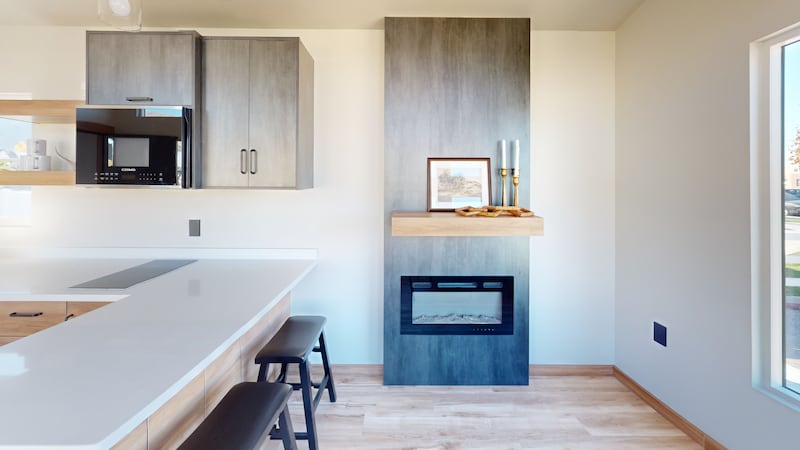
Gappmayer and Varela say their 300, 400, and 500 square-foot floor plans are more like a hotel room with a kitchen area — smaller than most traditional one-bedroom apartments but still enough room for a king-sized bed and full shower. Ten-foot ceilings and extensive windows help add the illusion of more space.
“There’s been a lot of people thinking they couldn’t live in a space this small, and they leave trying to figure out a way to make it work because they’re really excited about how the space would fit for them and their family,” Gappmayer says.
Some people downsize their belongings to fit, while others don’t have much to begin with or store lesser-used items at a family member’s place.
Buyers can customize some aspects, such as the type of flooring and cabinet colors. The base price includes the full costs of manufacturing, delivery, and installation. Property owners are responsible for providing a concrete foundation, running utilities to the site, and getting the proper permits.
Currently, the company takes approximately 8-10 weeks to manufacture one batch of five homes, but they are working to ramp up their production capabilities to meet increasing demand. Varela says owning their own production facility with in-house engineers and subcontractors is key to producing a high-quality product at a reasonable cost.
“Because we control the whole building process from top to bottom without any major overhead, we’re able to keep costs really low,” he says.
Production takes place in Texas, where they found a more affordable deal on a facility, but they have offices and a model home in Mapleton, Utah.
The housing crisis made personal
The founders of Summit Luxury Dwellings believe that a combination of private and public sector solutions is necessary to make housing more affordable in Utah. They applauded the efforts of state and local leaders who have made it clear that housing is a priority.
The Utah Housing Strategic Plan lays out 46 tactics to address housing affordability, including financial incentives, revisions to laws and policies, resources for local governments and better coordination between agencies. Elected officials have often spoken about the housing crisis in a more personal way as well.
As a father, Varela says it struck a chord with him when Governor Cox said during the Ivory Innovations Summit that there were Utahns moving away from family because they couldn’t afford to stay. Cox shared that one of his own children had shown him a house listing in Indiana for less than half of what they would pay in Utah.
For some families, Varela hopes a tiny but high-quality $75,000 starter home might provide a better way to start building equity.
“I really don’t want my kids moving to Indiana,” he says. “I want them to stay here.”